CRE marketing guide
For lease vs for sale: how the brochure should change
A leasing brochure and a sale brochure for the same building answer different questions. What to lead with, what to include and what to leave out in each.
Same building, different reader
A building offered for lease and the same building offered for sale are marketed to different people with different questions. A prospective tenant is deciding whether the space will work for their business and what it will cost each month. A prospective buyer is deciding whether the property is worth the price, as a place to run a business, as an investment, or both.
Many brokers start from one brochure and swap the headline. The result usually serves neither reader well: tenants wade through pricing metrics they do not need, and buyers find the information they do need, such as the income, the tenancies and the land, buried or missing. A few deliberate changes make each version much more useful.
What a tenant needs first
A tenant reads a leasing brochure with a floor plan in mind. Lead with the space itself:
- Available area for each unit, how it is measured, and whether units can be combined or divided.
- Asking net rent per square foot per year, and the additional rent (often called TMI in Ontario: taxes, maintenance and insurance) with the year it applies to.
- Availability date, minimum and maximum term, and any fixturing period the landlord is prepared to discuss.
- For industrial space: clear height, shipping doors (truck-level and drive-in) with sizes, power, sprinklers, column spacing and the office component.
- For office space: floor plate, current layout or condition (built out, shell, previous tenant’s improvements), elevators, washrooms, HVAC hours and parking ratio.
- For retail space: frontage, signage rights, co-tenancy, foot and vehicle traffic context, and restrictions such as exclusives held by other tenants.
- Permitted uses under the zoning, because a tenant’s use has to be allowed before anything else matters.
A floor plan or unit plan is often the single most useful page in a leasing brochure. If there is no plan, a clear site plan with the unit outlined is the next best thing.
What a buyer needs first
A buyer reads a sale brochure as the start of an underwriting exercise. Lead with the asset and the deal:
- Asking price, or the offering process if it is unpriced, and how offers will be handled.
- Site area, frontage, building area and year built, with sources.
- Tenancy: vacant, owner-occupied with a leaseback, single-tenant or multi-tenant, and the remaining lease terms.
- Income and expenses for an investment property, or at least the net operating income and how it was calculated.
- Zoning and official plan designation, because they set what the next owner can do with the land.
- Property taxes, servicing and any known capital work.
Calculated metrics such as price per square foot or capitalization rate belong in a sale brochure only when they can be calculated from figures you are prepared to show, and they should be labelled as calculated. Detailed rent rolls and tenant financials normally stay in the confidential offering memorandum.
Pages that change between the two
Cover and headline
The cover should say plainly whether the property is for lease, for sale, or both, and show the most important number for that reader: available area and asking rent for a lease; price or offering process and site area for a sale.
Highlights
Leasing highlights describe what the space lets a business do: loading, ceiling height, access to the highway network, labour within a commute, visibility. Sale highlights describe why the property holds or grows value: land size and coverage, income and lease terms, zoning flexibility, location fundamentals.
Financial page
A leasing brochure has a cost summary: net rent, additional rent and the total occupancy cost per square foot, with the year of the additional rent estimate. A sale brochure has a financial summary: income, expenses, net operating income and pricing metrics, or a note that financial information is available after a confidentiality agreement is signed.
Location pages
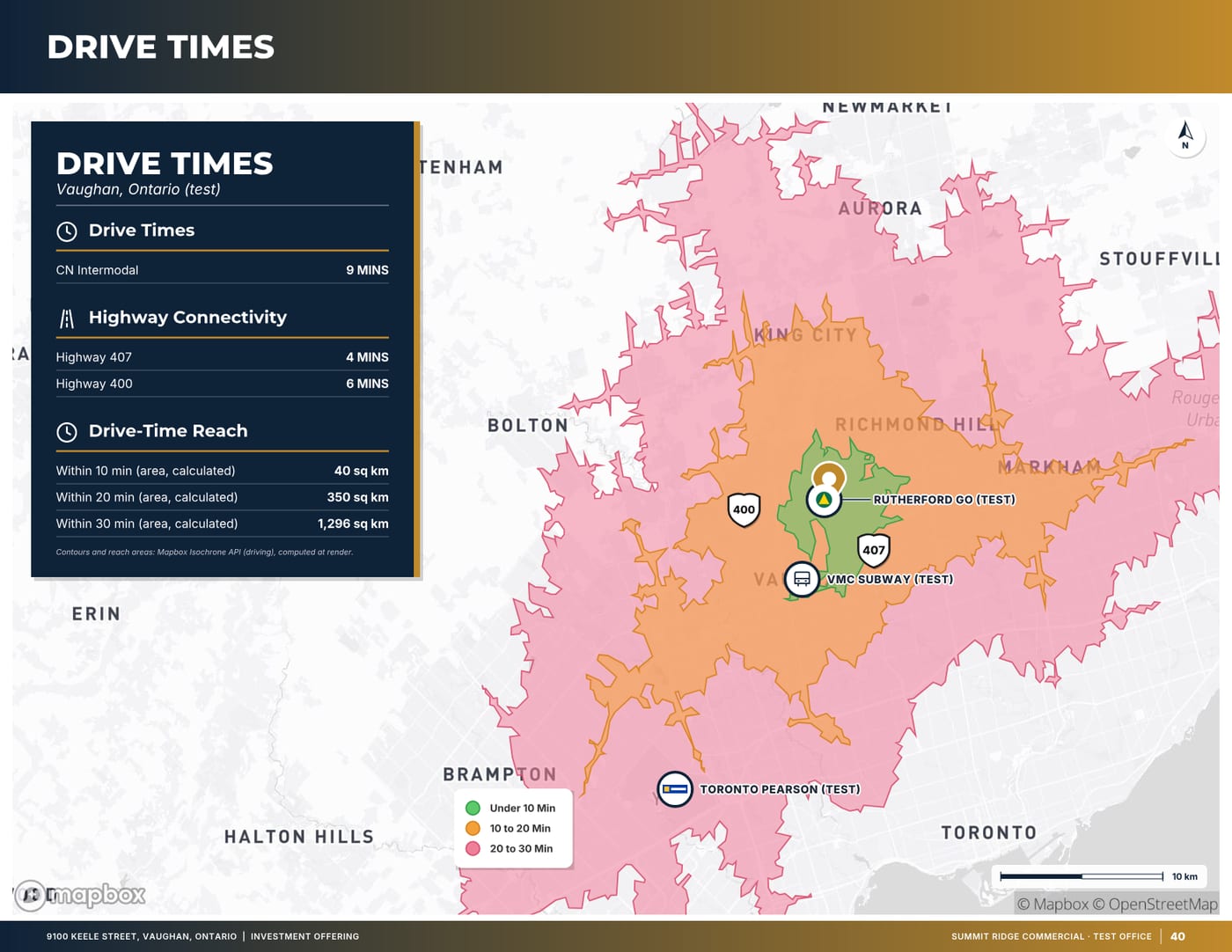
Both versions benefit from drive times, transit and nearby occupiers, but the emphasis shifts. Tenants care about their staff and customers getting there; buyers care about the same things because future tenants will, plus the longer-term direction of the area, such as nearby development and infrastructure.
When a property is offered for both
Some vendors will consider either a sale or a lease. Two short documents usually work better than one long one that tries to address both readers. If you do produce a single brochure, keep the leasing and sale terms on clearly separate pages, state that the vendor will consider both, and avoid mixing rent and price metrics on the same page, which confuses both audiences.
For an owner-user sale with a leaseback, the buyer is effectively buying an investment. Treat it as a sale brochure with a tenant profile and a summary of the proposed lease terms.
Areas and measurement
Both readers compare your property with others, so state how every area was measured. A leasing brochure usually quotes rentable area, which can include a share of common areas, while a sale brochure often quotes the gross building area and the site area. Say which standard was used, for example a BOMA measurement standard, and where the figure came from, such as a measurement report, the survey or municipal records. If two sources disagree, use the one you can document and note it. Tenants and buyers who discover that an area was overstated rarely give the rest of the document the benefit of the doubt.
Language that ages badly
Phrases such as “move-in ready”, “immediate occupancy” or “below market rent” become false the moment circumstances change, and a brochure can circulate for months. Prefer specific, dated statements: “available from 1 March”, “TMI estimated at $X per square foot for this year”. If a statement depends on a date, put the date in the text.
Avoid quoting vacancy rates, average rents or market statistics without a named source and a date. A buyer or tenant who checks a figure and finds it unsupported will discount the rest of the document.
Common mistakes
- Showing a sale price and an asking rent in the same headline without explaining that both are options.
- Quoting net rent without the additional rent, which makes the space look cheaper than it is and wastes everyone’s time.
- Leaving out the measurement basis for areas, so two units or two buildings cannot be compared.
- Using a cap rate in a leasing brochure, where it means nothing to the reader.
- Including tenant names or rents in a public sale brochure without the vendor’s and tenants’ agreement.
- Reusing photos of a previous tenant’s fit-out that no longer exists.
A quick checklist for each version
For lease
- Unit areas and measurement basis
- Net rent and additional rent with the year
- Availability date and term
- Specifications that matter for the use
- Floor or unit plan
- Permitted uses
- Leasing contact
For sale
- Price or offering process
- Site and building areas with sources
- Tenancy summary
- Income summary or a note on the OM
- Zoning and official plan
- Taxes and servicing
- Disclaimer and confidentiality wording approved by your brokerage
How OfferingStack helps
OfferingStack builds the teaser, brochure and offering memorandum from one property file, so you can record the available area for lease, the asking price or the offering process once and keep every document consistent. The cover can carry a clear status such as “For Lease”, location pages come from the address with their sources, calculated values are labelled, and pages without data are left out. You review every page before anything is distributed.
What these pages look like
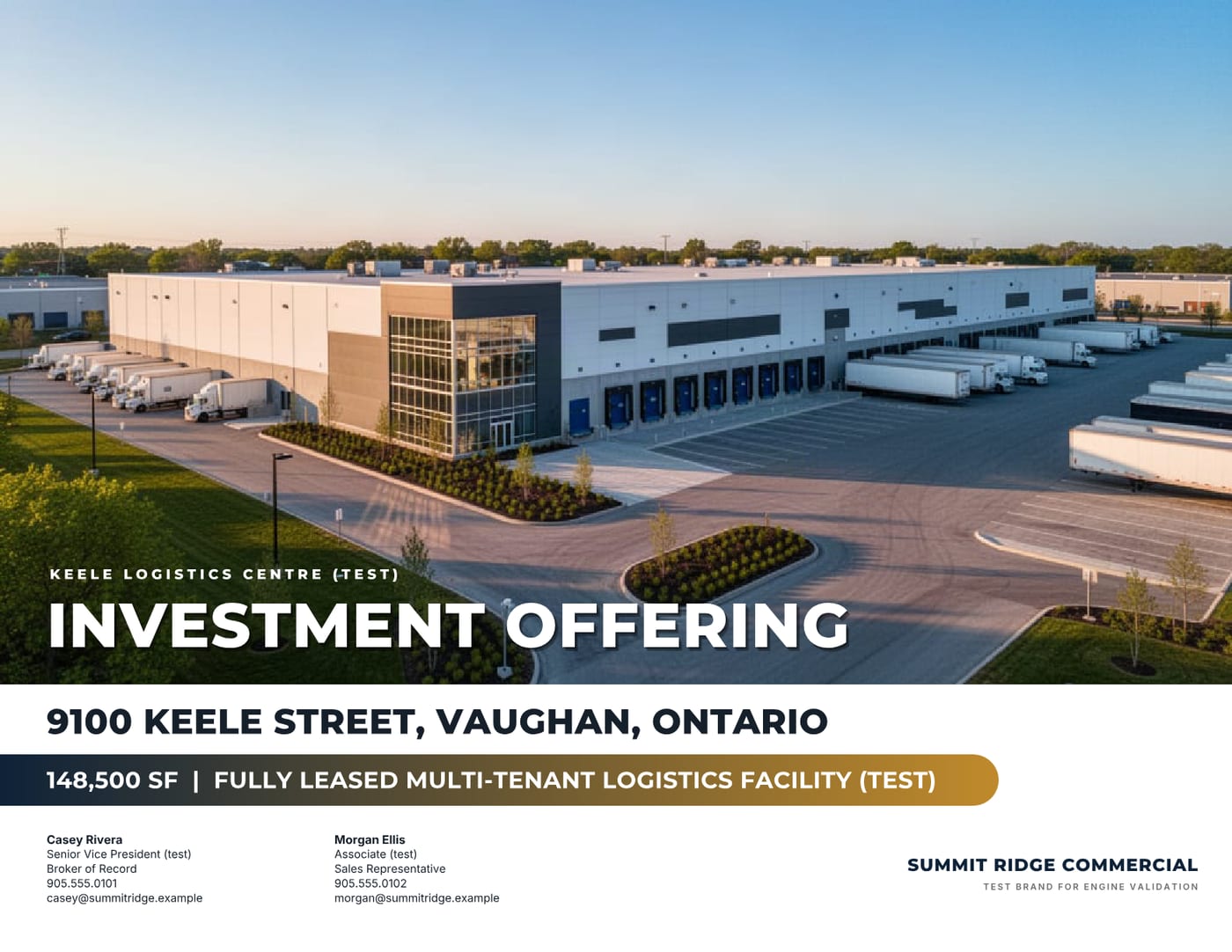
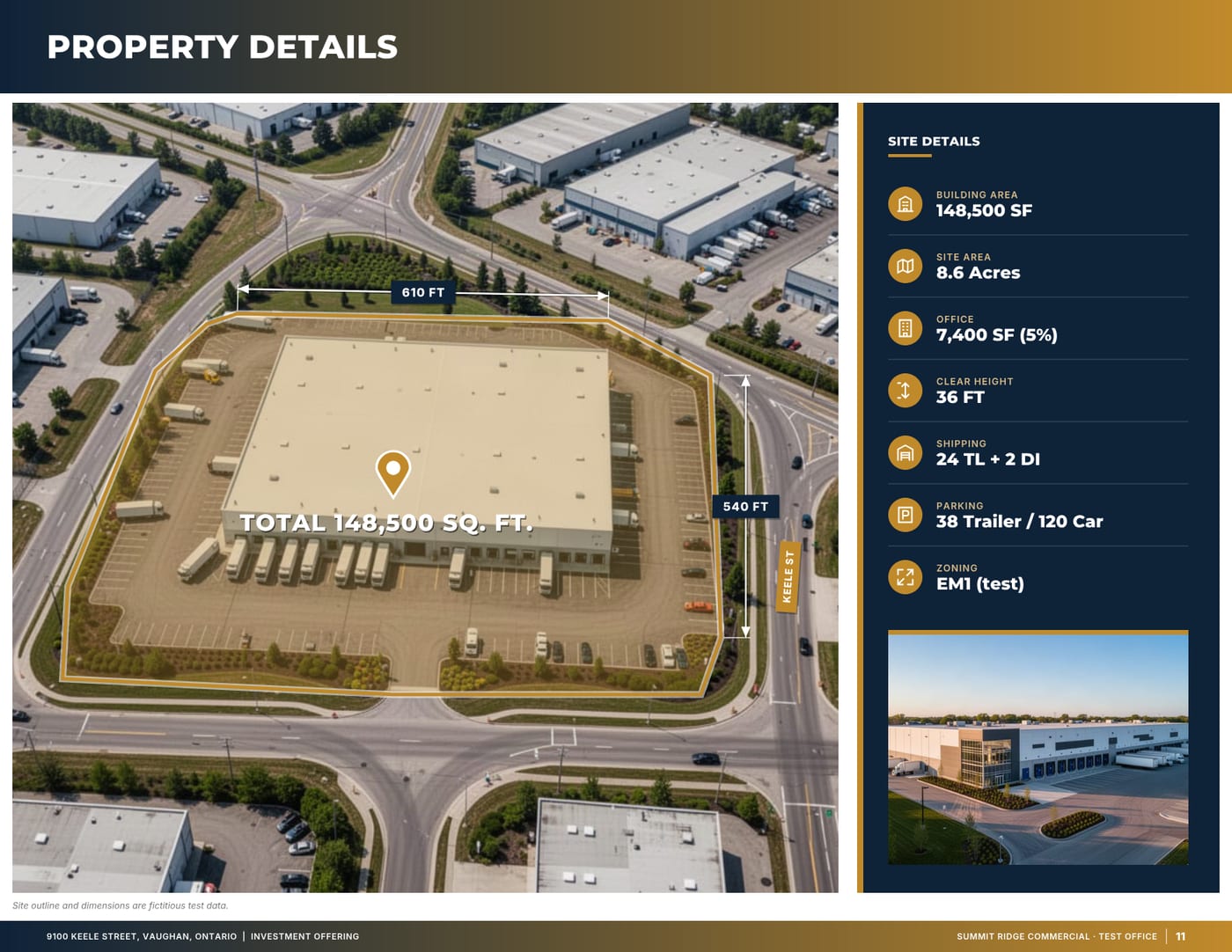
Sample pages are generated by the product from a fictitious test listing (9100 Keele Street, "Summit Ridge Commercial" test brand). Figures marked (test) are not real.
Related
Last updated 2026-10-14. General information for commercial real estate professionals, not legal advice.
Start with the fact sheet you already have.
Upload it, answer only what’s missing for the output you choose, and review a watermarked preview before you buy anything.