CRE marketing guide
Apartment building offering memorandum: unit mix, rent roll and the numbers multi-family buyers check
How to build an offering memorandum for an apartment building: unit mix, suite rent roll, expenses, rent regulation, price per unit, GRM and cap rate.
What multi-family buyers want to know first
Apartment buildings attract a wide range of buyers, from families buying their first six-plex to institutions assembling portfolios, but they ask the same first questions. How many suites, of what type? What do they rent for today, and what could they rent for? What does it cost to run the building, and who pays the utilities? What has been spent on it, and what is coming due? An offering memorandum that answers those four questions in its first few pages gets read; one that opens with paragraphs about the neighbourhood gets skimmed.
The structure of a multi-family OM follows the general pattern of any commercial OM, with the tenancy and financial sections adapted to many small leases instead of a few large ones.
The unit mix page
The unit mix summarises the building by suite type. It is the page buyers use to compare your building with others and to spot the opportunity.
- One row per suite type: bachelor or studio, one-bedroom, two-bedroom, three-bedroom, and any special units such as townhouses, a superintendent’s suite or commercial space at grade.
- The count of each type and, where known, the average size in square feet (or square metres).
- Average in-place rent per month for each type, and the market rent you believe the suites would achieve today, with the source of that belief (recent leasing in the building, comparable listings or an appraisal).
- Totals: number of suites, total monthly rent in place and at market.
The difference between in-place and market rent is often the core of the investment case, especially in long-held buildings. Be careful with it. State whether market rent assumes renovation, how many suites turn over in a typical year, and what rent rules apply, so the buyer can judge how much of the gap is realistically reachable and how quickly.
The suite rent roll
Behind the unit mix sits the rent roll, one line per suite: suite number, type, size if known, current monthly rent, the date the tenancy started or the rent was last increased, any parking or storage charges, and whether the suite is vacant, under renovation or occupied by staff. Date it, and make sure the annual total reconciles with the income on the operating statement.
Personal information does not belong in a marketing document. Tenants’ names and contact details are not needed to underwrite the building; leave them out of the OM and release a fuller rent roll only through the data room, if at all, under the confidentiality agreement and the privacy rules that apply.
Income, expenses and NOI
The operating statement for an apartment building usually has more income lines and more expense variety than a net-leased commercial property, because the landlord pays most costs directly.
- Income: residential rent, parking, laundry, storage, any commercial rent, and other income such as cable or rooftop agreements. Show a vacancy and bad-debt allowance.
- Expenses: realty taxes, insurance, utilities (heat, hydro or electricity, water), repairs and maintenance, superintendent or on-site staff, management, elevator and other service contracts, and administration.
- Utilities: say who pays what. A building where tenants pay their own electricity will have a very different NOI from one where the landlord pays it, and buyers will compare.
- NOI and its basis: in-place, trailing twelve months or pro forma, dated and labelled. Keep capital work (boilers, roofs, balconies, windows) out of operating expenses, and list it separately.
A short capital expenditures schedule, showing what has been done recently and what the seller knows is coming due, answers questions that buyers will otherwise ask during due diligence.
Rent regulation and tenant protections
Residential tenancy law shapes the value of an apartment building more than any lease does. Rent increase limits, rules on increases between tenancies, notice requirements and protections against eviction all vary by province, state and sometimes city.
In Ontario, for example, most residential units are subject to an annual rent increase guideline set by the province, while units first occupied for residential purposes after November 15, 2018 are exempt from it. Other provinces and many US states and cities have their own regimes, and they change over time. The OM should say which rules the seller understands to apply to the building, without giving legal advice, and recommend that buyers confirm them with their own counsel.
Pricing metrics: price per unit, GRM and cap rate
Apartment buyers compare buildings on three numbers, and the OM should show all of them with their basis.
- Price per unit (per suite or door): the asking price divided by the number of suites. Meaningful only next to the unit mix, because larger suites trade at higher prices per unit.
- Gross rent multiplier: the asking price divided by gross annual income. A quick screen that ignores expenses; state whether income is in place or pro forma and before or after vacancy.
- Cap rate: NOI divided by the asking price. The real measure of return, and only as good as the NOI behind it.
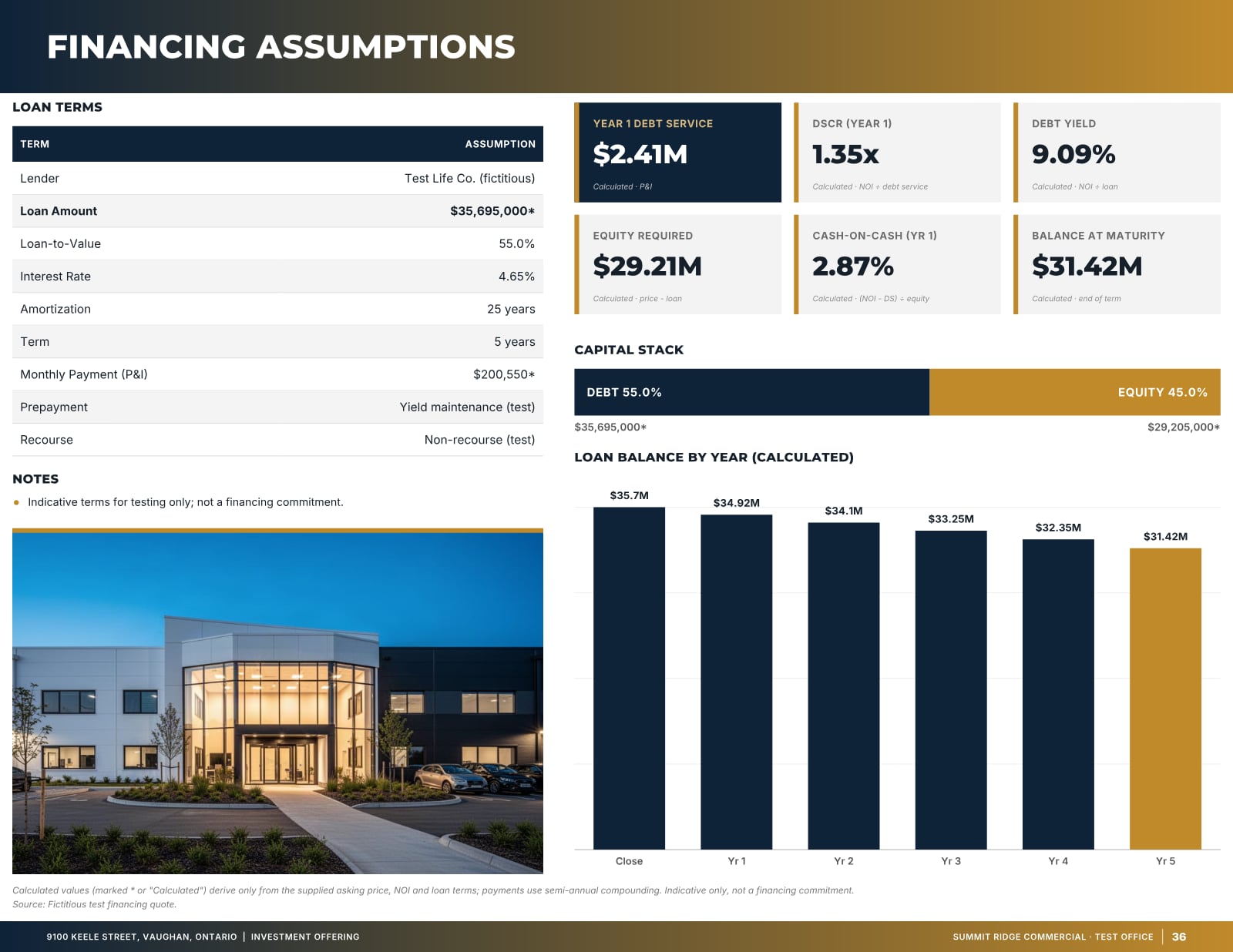
Add sale comparables of similar buildings with their price per unit and, where known, cap rate and GRM, with dates and sources. If financing matters to likely buyers, show an illustrative loan with its rate basis, amortization, debt service and debt service coverage ratio, labelled as illustrative; in Canada, insured multi-family financing has its own rules that a mortgage broker can explain.
Photos, location and the building itself
Multi-family buyers look at the building as a set of systems that they will have to run. Show the exterior from the street and the rear, the entrance and lobby, corridors, the laundry room, the boiler or mechanical room, the roof, parking and a typical renovated and unrenovated suite of each main type, with the date of each photo. A short building specifications table helps: number of storeys, construction, year built, elevators, heating system and fuel, hot water, electrical service and whether suites are separately metered, windows and balconies, and the parking count.
For location, renters’ priorities drive value: transit within walking distance, grocery and daily needs, schools, parks and employment areas. Show them on a map with distances, and add population, household and renter figures for the surrounding area from the official census, with the source and year. Avoid adjectives the buyer can’t check; a map with walking distances does more than “highly desirable neighbourhood”.
Building an apartment OM in OfferingStack
OfferingStack builds the OM pages from the facts you enter or upload. For an apartment building that can include a Unit Mix page (suite type, count, average size, in-place and market rent), a Tenancy & rent roll page, a Financial Overview with in-place and pro forma columns, a 10-year cash flow, a Capital Expenditures page when you list at least two items, Pricing & Valuation with a cap-rate sensitivity table, and Financing Assumptions. The headline metrics show Price / Unit and a GRM labelled as calculated, with their formulas, when the price, suite count and gross income are entered.
Pages without data are left out rather than shown empty, location pages are built from sourced map and census data, and you review and approve every page before it is distributed. A free calculator for GRM and price per unit is linked below for checking the arithmetic before you publish.
What these pages look like
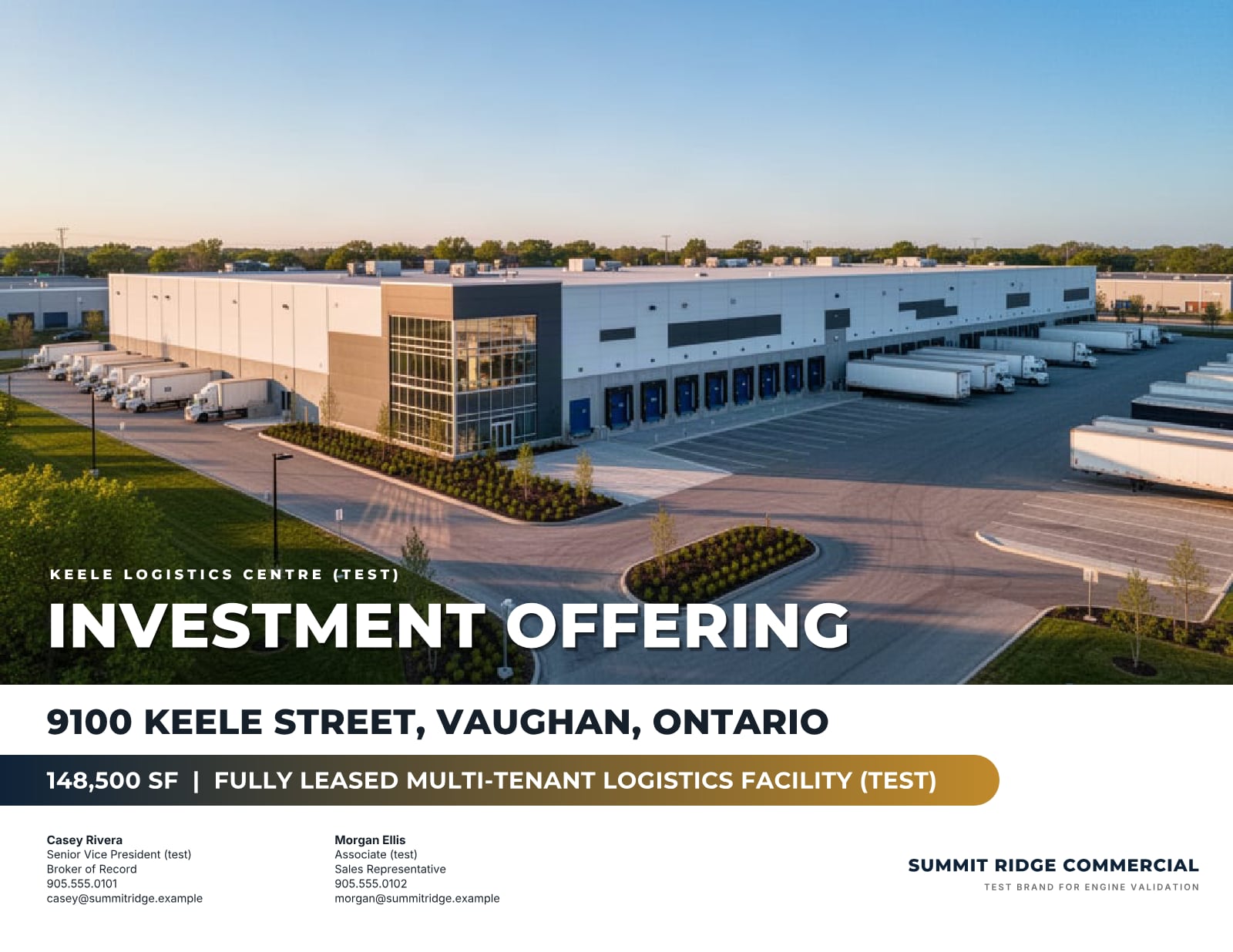
Sample pages are generated by the product from a fictitious test listing (9100 Keele Street, "Summit Ridge Commercial" test brand). Figures marked (test) are not real.
Related
Last updated 2026-10-15. General information for commercial real estate professionals, not legal advice.
Start with the fact sheet you already have.
Upload it, answer only what’s missing for the output you choose, and review a watermarked preview before you buy anything.