CRE marketing guide
How to market a commercial sublease: what subtenants need to see first
How to market sublease space: term remaining, head-landlord consent, the rent basis, furniture and fit-out, and the questions subtenants ask first.
Why a sublease is marketed differently
A sublease is space offered by an existing tenant (the sublandlord) for some or all of the time left on its own lease. To a prospective subtenant it is a different product from a direct lease: the term is fixed by someone else’s lease, the landlord whose building it is usually has to consent, and the space typically comes as it is, often with the current tenant’s furniture, cabling and fit-out.
Those differences are exactly what a subtenant and their broker want to understand first. A sublease listing that reads like a direct listing, with the term and consent buried in the fine print, wastes everyone’s time: tenants who need a ten-year commitment call about a space with three years left, and tenants who would love a short, furnished space never realize that is what is on offer.
Lead with the term and the consent
Put the sublease facts in the first block of the listing, beside the area and the rate:
- When the sublease ends: the expiry of the sublandlord’s lease (or an earlier date if the sublandlord offers less than its full remaining term), stated as a date.
- The term remaining on a stated date, so readers do not have to work it out.
- Whether the head landlord’s consent is required, and any conditions the sublandlord already knows about.
- Whether a longer term may be possible by a direct deal with the head landlord, said only if the landlord has indicated it is open to that.
- Whether the sublandlord will consider part of the space, and the minimum it would split off.
Be precise about what you know. Consent is the head landlord’s decision under the lease, so describe it as a requirement, not as a formality, and never imply it has been given before it has.
Rent: what the subtenant actually pays
Sublease rates are often quoted differently from the head lease, so state the basis plainly. Say whether the rate is net with additional rent or TMI on top, or gross with operating costs included, and give the additional rent estimate and its year. If the sublandlord is offering free rent, a reduced rate, or a contribution towards moving or minor work, describe the offer, and make clear whether it is negotiable.
Remember that the subtenant usually takes on the obligations of the head lease for the space, including how operating costs, taxes and utilities are shared, so give enough detail on the recovery structure for their broker to estimate the total occupancy cost. Our free net effective rent calculator helps compare a sublease offer with a direct deal on a like-for-like basis; it is arithmetic only, not advice.
Show the space as it is
Most sublease space is offered in its current condition, and that is often its main attraction. Photograph it as it stands, cleaned up and well lit, and say what is included:
- Furniture, workstations, meeting rooms and kitchen equipment, with a note on what stays and what leaves.
- Cabling, server room, security and audiovisual equipment, and whether they are available to the subtenant.
- For industrial space: racking, cranes, dock equipment and any process installations that stay, with their condition.
- Signage rights, parking allotted to the space, storage, and after-hours access as the head lease allows them.
A current floor plan matters more for a sublease than for most listings, because the subtenant is taking the layout as it is. Mark the suite, the entrances and any shared areas, and give the rentable and usable areas with the measurement basis.
Timing: the term shortens every month
A sublease loses appeal as its remaining term gets shorter, because fewer occupiers can justify moving for a short stay. Start marketing as soon as the sublandlord has decided to give up the space and the head lease has been reviewed, not after the space has already been empty for months. Set the rate and the incentives with the remaining term in mind, revisit them at fixed intervals, and update the term remaining on every version of the brochure and availability sheet so readers never have to calculate it from an old date.
Who to market it to
Subleases suit occupiers who value speed and flexibility over control: growing companies that need space quickly, project teams, firms between longer leases, and businesses testing a new market. Tenant-representation brokers are the most important audience, because they will match the space to clients whose timing fits. Send the listing to them with the term, consent position and rate in the first lines of the email, and keep a short availability sheet up to date as the term shortens.
Check the head lease before you advertise. Some leases limit how sublease space can be marketed, the rate it can be advertised at, or require the landlord to approve the marketing materials, and some give the landlord the right to take the space back instead of consenting. Your client’s lawyer should confirm those terms before the listing goes out.
The questions subtenants ask, answered in the listing
- How long can I stay, and can I stay longer?
- What does consent involve, and how long has it taken in this building before, if the sublandlord knows?
- What is the total monthly cost, including additional rent and utilities?
- What is included, and what condition is it in?
- When can I move in, and is there any work the sublandlord will do first?
- Can I put up signage, and how much parking comes with the space?
Answering these on the first page of the brochure or the listing website saves several rounds of calls and lets serious subtenants move to a letter of intent sooner.
Canada and the United States
The structure is the same on both sides of the border, but the vocabulary differs. Canadian listings usually quote net rent plus TMI or additional rent, and many leases speak of an assignment or sublet requiring the landlord’s consent, not to be unreasonably withheld. US listings may quote full-service gross or NNN rents, and the consent language is set by each lease and the state’s law. In both countries the lease governs: describe the terms as they are written and leave the legal interpretation to counsel.
How OfferingStack handles sublease listings
In OfferingStack, a listing marked as a sublease, or one with a sublease expiry typed in, gets a “Sublease Terms” strip on its availability page built only from the facts you entered: the sublease expiry, the term remaining (calculated and labelled), whether landlord consent is required, a longer term by direct deal with the head landlord when you say so, and the rate. A fact you did not enter is never filled in, and the strip only appears when there are at least two facts to show. The rest of the brochure, the 1-page lease availability sheet and the listing page come from the same property file, and you review every page before it is sent.
Sublease marketing checklist
- Sublease expiry as a date, and the term remaining on a stated date.
- Head-landlord consent described accurately; nothing implied before it is given.
- Rate with its basis, additional rent estimate and year, and any incentives.
- What is included (furniture, cabling, equipment) and its condition.
- Current floor plan with rentable and usable areas and the measurement basis.
- Parking, signage and access as the head lease allows.
- Head-lease marketing restrictions checked by counsel before launch.
- Availability sheet dated and kept current.
This guide is general information, not legal advice. A licensed professional should review the listing and any sublease documents.
What these pages look like
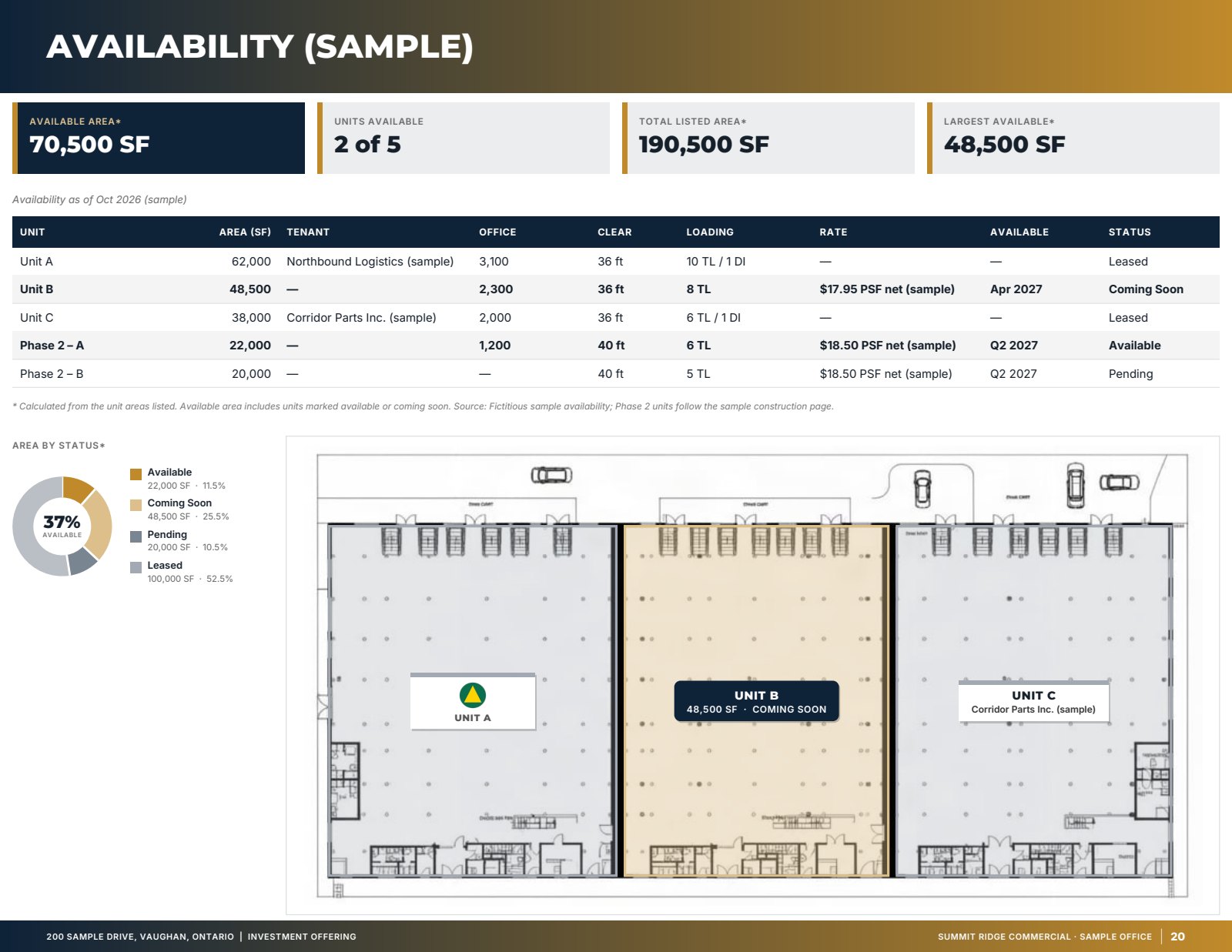
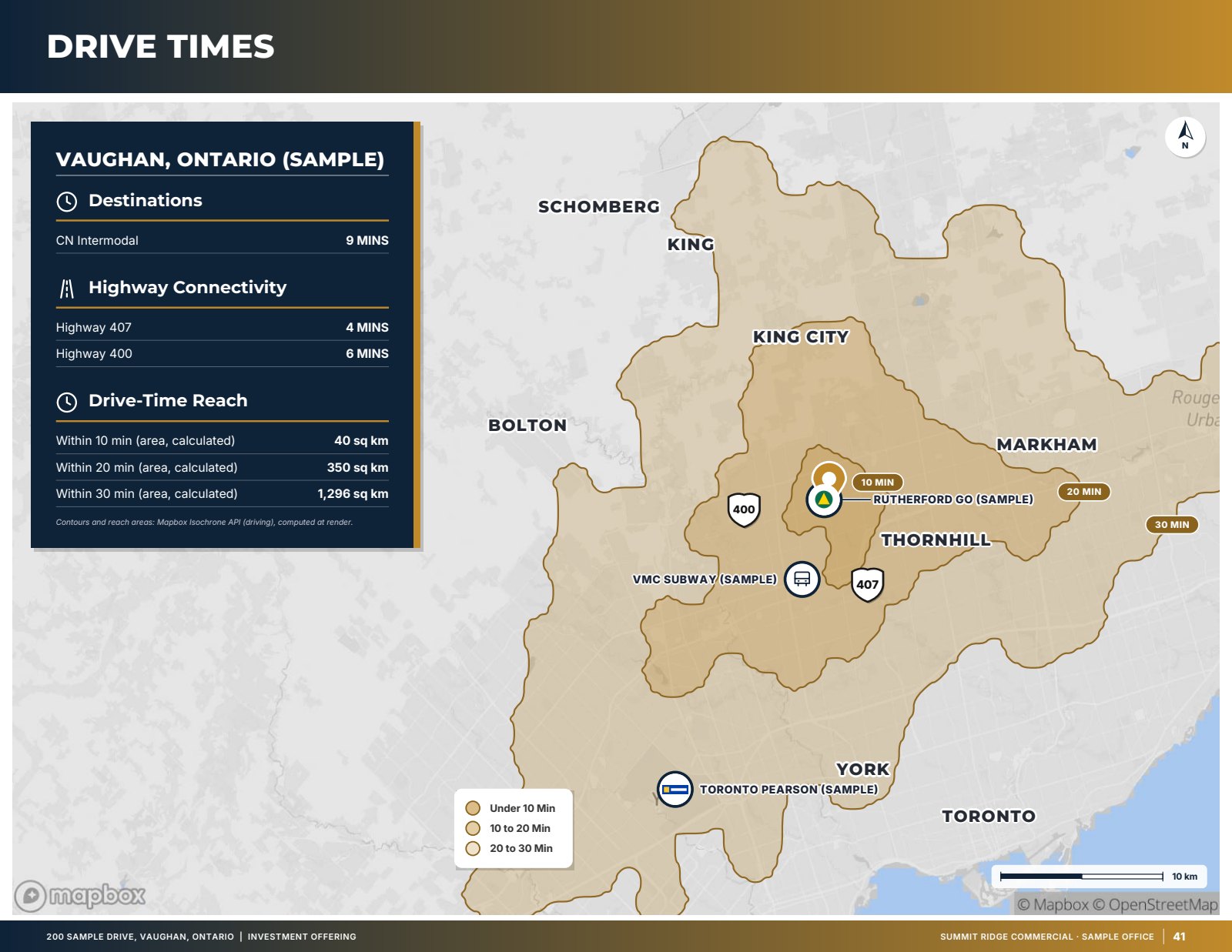
Sample — fictitious property. Pages generated by the product for an invented sample listing with an invented brokerage brand. Figures marked (sample) are not real.

Related
Last updated 2026-10-15. General information for commercial real estate professionals, not legal advice.
Start with the fact sheet you already have.
Upload it, answer only what’s missing for the output you choose, and review a watermarked preview before you buy anything.