CRE marketing guide
Industrial outdoor storage (IOS) listings: what yard buyers and tenants check first
How to market an industrial outdoor storage (IOS) site for sale or lease: usable yard area, surface, zoning for outdoor storage, access and the site plan.
What counts as industrial outdoor storage
Industrial outdoor storage (IOS) is industrial land used mainly for storing things outside: truck and trailer parking, container storage, equipment and materials yards, contractor yards and fleet parking. A site usually has a small building, such as a shop or an office, on a large yard. The value is in the land, how much of it can be used, and whether outdoor storage is allowed on it.
Because the building is a minor part of the property, a standard industrial brochure that leads with clear height and dock doors misses what an IOS buyer or tenant is looking for. They want to know how many trucks fit, how they get in and out, what the ground is like, and whether the municipality allows the use.
Lead with the usable yard, not the site area
The gross site area is rarely the area a user can actually use. Setbacks, landscaping strips, stormwater ponds, easements, slopes and the building footprint all reduce it. State both figures and how you got the usable one:
- Gross site area, in acres and hectares (or square feet and square metres).
- Usable yard area, with a note on what was excluded and the source (a survey, a site plan or the vendor’s estimate).
- Surface: paved, compacted gravel, partly surfaced or unimproved, with the area of each where known.
- Fencing, gates and lighting, and whether the yard is secured.
- Building area and use, if there is one: shop, office, washrooms, wash bay.
- Truck and trailer parking counts if the site has been striped or laid out, and car parking for staff.
If the usable area depends on work that has not been done (grading, surfacing, removing a structure), say so plainly rather than quoting the larger figure.
Zoning: the question that decides the deal
Many industrial zones allow outdoor storage only as an accessory use, limit it to a share of the lot, require screening from the street, or prohibit it in front yards. Some municipalities do not allow truck or trailer parking as a principal use at all. An IOS listing should quote the zone, the by-law or code it comes from, and the specific provisions on outdoor storage that apply, with the date you checked.
If the current use relies on a minor variance, a site-specific exception or a legal non-conforming status, describe it accurately and suggest buyers confirm it with the municipality. A buyer who discovers a zoning problem after waiving conditions is the worst outcome for everyone.
Access and circulation
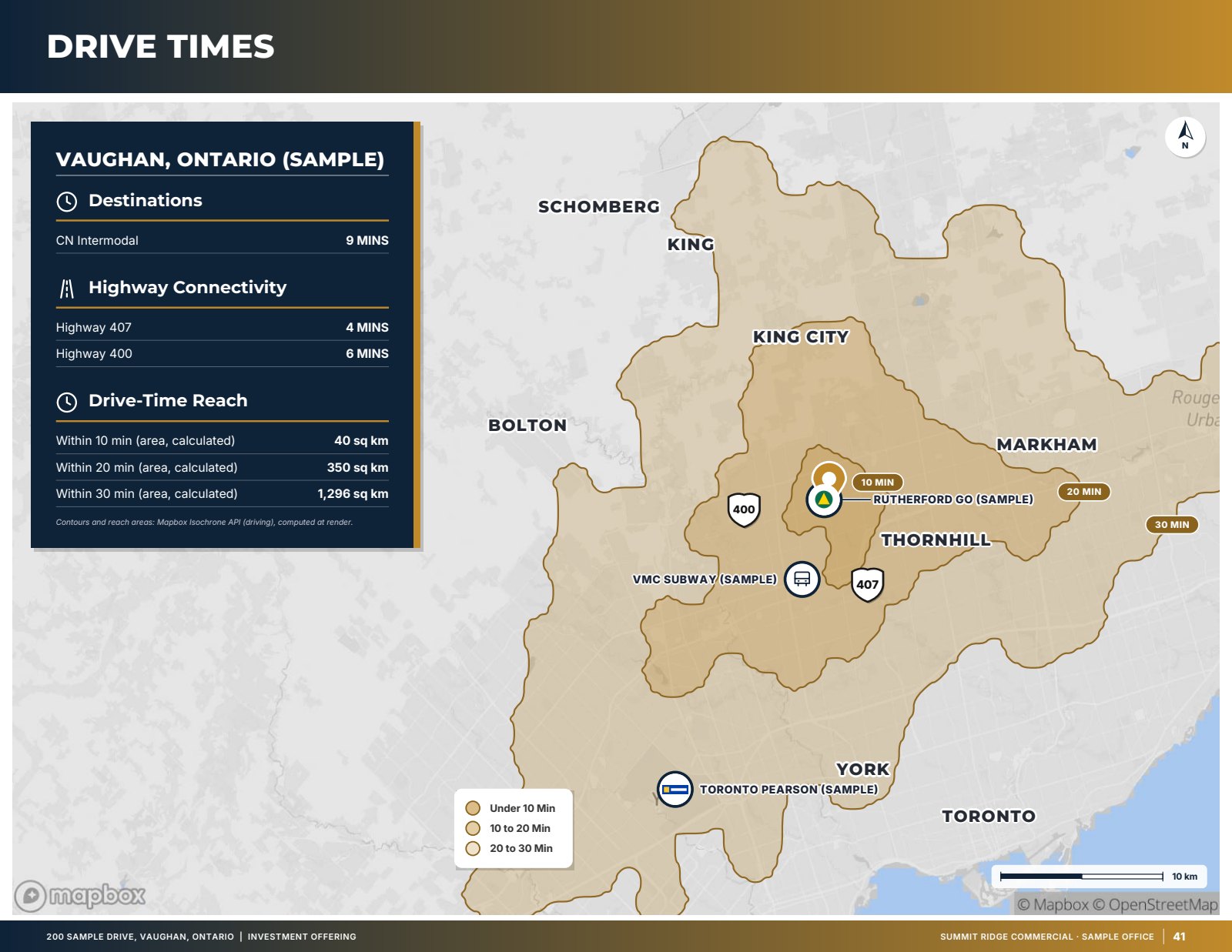
For yards used by trucks, access is almost as important as zoning. Describe the number and width of entrances, whether full-length tractor-trailers can turn on site, and whether the road in front allows truck traffic all year. Give the measured drive time to the nearest highway interchange rather than calling it close. A drive-time map from the site to the regional highways, ports, rail terminals or airports that the likely users serve helps a reader see the site’s reach at a glance.
Site plan and aerials
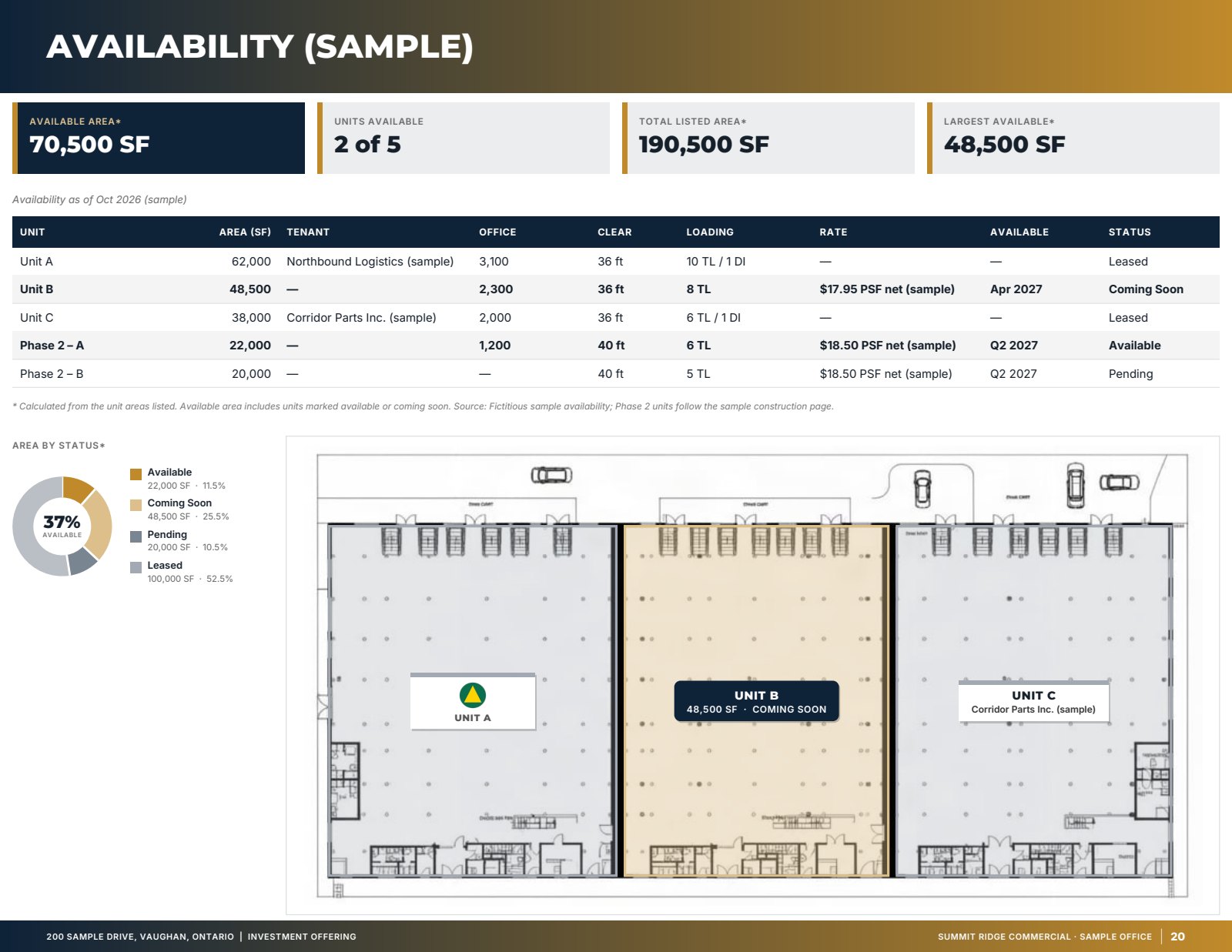
For IOS, the site plan is often the most important page. Show the property boundary, the usable yard, the surface areas, the entrances, the building and any easements or no-build areas, with the dimensions where they matter. An aerial photo with the property outlined shows how the yard sits among its neighbours and whether nearby properties are similar uses. Use a current aerial: yards change quickly, and an old image showing different stored equipment or a missing building raises questions.
Servicing, drainage and environmental
Outdoor storage sites often have limited municipal services, and users care about different things than building tenants. State what is at the lot line (water, sanitary, storm, hydro and its capacity, gas) and what the building actually uses. Stormwater is a frequent issue on large surfaced areas: note any stormwater management works, ponds or approvals. Environmental history matters on yards that stored fuel, vehicles or materials; list existing reports with their dates and scope so buyers know what is available before they ask.
For lease or for sale
Tenants of IOS sites usually compare rent per acre per month or per year, or per truck or trailer stall, and want to know what is included: security, lighting, snow clearing, maintenance of the surface, and who pays property taxes. Quote the rent with its basis and say what additional costs apply. Investors buying an IOS site look at the land value per acre, the lease term and the tenant, and what the site could be used for if the current use ended. Give price per acre and per usable acre as calculated figures with their inputs; our free price per square foot calculator also works in acres and hectares.
Questions yard users ask on the first call
- How many tractor-trailers, containers or pieces of equipment fit on the usable yard, and is there a layout?
- Can trucks enter, turn and leave without backing onto the road?
- Does the zoning allow this storage use as of right, and is screening or a setback required?
- Is the surface able to carry loaded trucks and heavy equipment through the spring thaw?
- Is the site fenced, gated and lit, and who looks after snow clearing and security?
- Are there washrooms, an office or a shop, and what power is available for block heaters or equipment?
Answering these in the brochure, or saying where the answer can be found, filters out unsuitable users before a site visit.
Canada and the United States
The product is similar on both sides of the border. Canadian listings commonly quote land in acres with hectares alongside, and rents on a net basis with taxes and operating costs as additional rent; US listings quote acres and often state rent per acre per month on a NNN basis. Zoning terms differ by municipality in both countries: an “outside storage” provision in an Ontario by-law and an “outdoor storage” use in a US zoning code may be defined very differently, so quote the provision itself rather than paraphrasing it.
How OfferingStack handles IOS listings
OfferingStack has no special IOS page kind; an outdoor storage site is built from the land and industrial pages. You add the gross and usable yard area, surface, fencing and security as property detail rows in your own words, and the typed industrial specs include the shipping court, trailer parking, car parking, power and door counts when there is a building. A site plan page shows your plan, the zoning page carries the provisions you enter, and location pages add drive times, connectivity and neighbouring occupiers from sourced data. Surveys, environmental reports and zoning sources can be attached to the listing for the data room without being printed. Figures you do not enter are left out, calculated values are labelled, and you review every page before it is sent.
IOS listing checklist
- Gross site area and usable yard area, with what was excluded and the source.
- Surface type and area, fencing, gates, lighting and security.
- Zone, by-law or code, and the exact outdoor storage provisions, dated.
- Entrances, truck turning room and road restrictions described.
- Measured drive times to highways and logistics hubs.
- Current site plan and aerial with the property outlined.
- Services at the lot line, stormwater works and environmental reports listed.
- Rent or price with its basis; price per acre labelled as calculated.
This guide is general information, not legal or planning advice. Confirm zoning and permitted uses with the municipality, and have a licensed professional review the listing before it is distributed.
What these pages look like
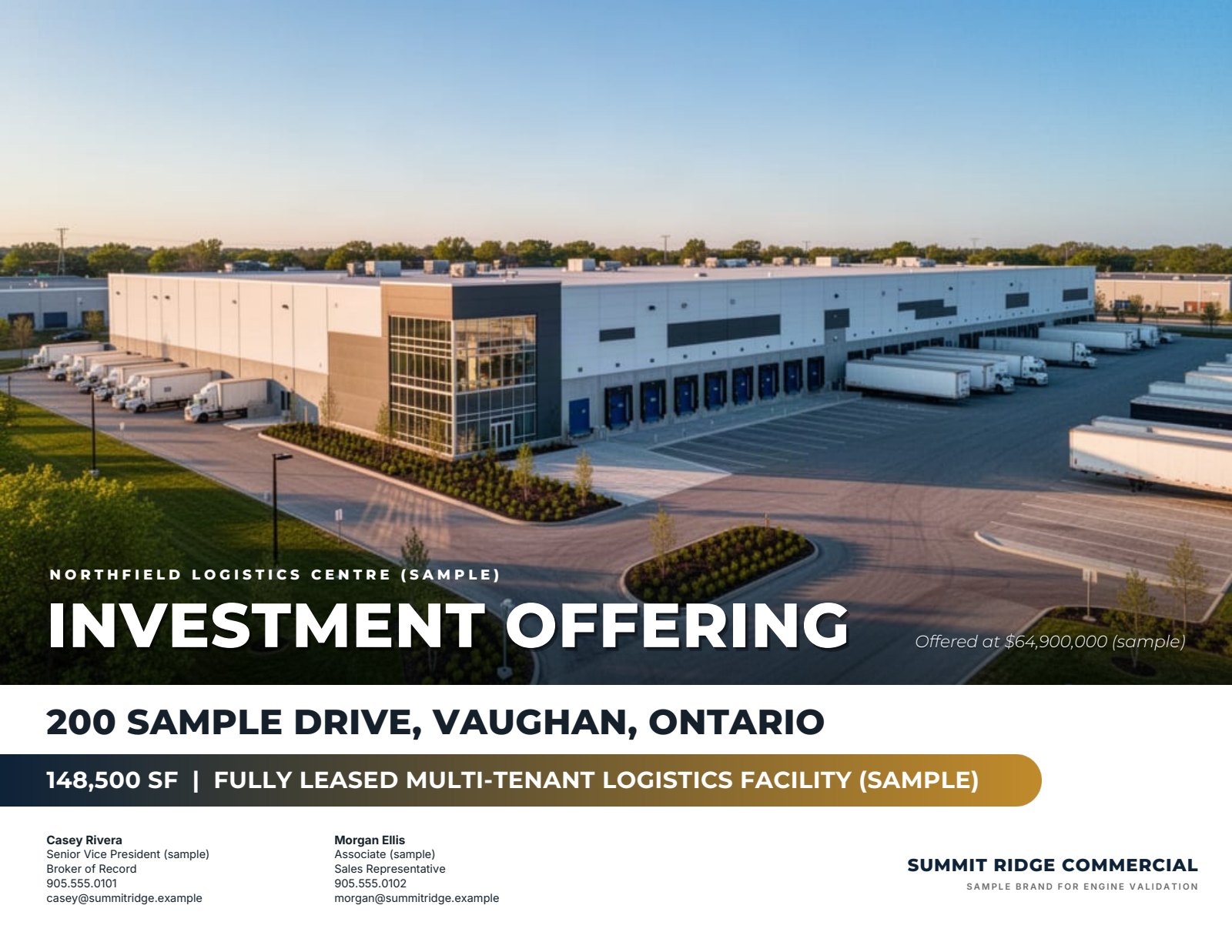
Sample — fictitious property. Pages generated by the product for an invented sample listing with an invented brokerage brand. Figures marked (sample) are not real.
Related
Last updated 2026-10-15. General information for commercial real estate professionals, not legal advice.
Start with the fact sheet you already have.
Upload it, answer only what’s missing for the output you choose, and review a watermarked preview before you buy anything.